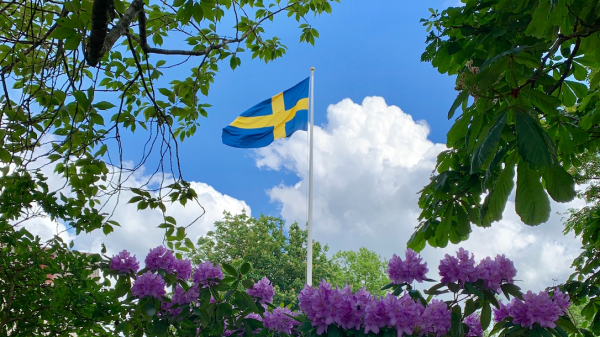
Photo by Drahomír Posteby-Mach on Unsplash
My journey began sometime around March 2013. I was having lunch at one of my favorite haunts on Sankt Eriksgatan with a good colleague of mine. Joe (not his real name) is from Australia, and at that time, we were both working at a content agency. We share a love of technology and the written word but are deeply divided on the topic of cricket.
Joe and I were sitting at one of those bar-type long benches in the window of the restaurant. Outside, the sun was strong and low, throwing a spotlight on the grit and grime that the winter leaves behind on the streets of Stockholm. The passing cars sent plumes of dirt into the air, and I despaired at thought of all those carcinogenic dust particles.
Joe is incredulous. I’ve completely missed the latest social-media meme — the Harlem Shake — and he simply cannot believe it. I fell into fits of laughter when he showed me the Norwegian Army performing this — now-iconic — dance. Joe’s a bit of a joker, so at first, I thought it was some kind of prank. To this day, if I ever want a laugh, I just take a look at that clip — the dude in the sleeping bag and the guy out to the far left with his snow racer, tube socks, and shower shoes completely crack me up.
It kinda reminded me of the moment I first saw The Hampster Dance. I’m not sure if the Zoomers fully appreciate how ground-breaking this stuff was, my son (15) certainly doesn’t, neither does he get why I find it so funny.
But what do internet memes have to do with becoming a Swedish citizen? At lunch that day, Joe talked about one of the reasons he became a Swedish citizen. He wanted to be able to vote, and specifically to be able to vote against ultra-right-wing fascism that was on the rise in Sweden at the time.
Back then, I didn’t feel any need to become Swedish. As an Irish citizen, I felt I had as much freedom and I didn’t need any special permits to work in Sweden. I felt somehow distanced from the idea. But, over the years, the seed Joe sowed in my brain started to grow.
The rise of right-wing politics
In 2010, about two and half years before the lunch with Joe, the Sweden Democrats (Sverigedemokraterna) (SD) — the fascists Joe was on about — won their first seats in government, earning 5.7% of the votes and 20 of the 349 mandates.
In Sweden, you not only have to win your seat, but you also have to win at least 4% of the entire vote to be granted entrance to parliament. When I first moved here, I thought this idea was odd, almost undemocratic. I’ve now lived here for more than two decades, and like most of the stuff I found weird in the beginning, I have now gotten used to. Today, the idea of a 4% minimum seems smart. It prevents local celebrities from getting voted in and holding national governments to ransom. The likes of the Healy-Rae’s in Co. Kerry, for example, and their decades of conflict-of-interest, which I feel is an embarrassment to Irish politics.
In the 2014 election, SD won 49 seats. And in September 2018, they increased to 62, becoming the third-largest party in the Swedish government.
In early 2018, while I was researching content for this article, repealing the 8th has nothing to do with abortion, it dawned on me that my emigration from Ireland had basically left me without a voice.
Irish citizens, who’ve lived abroad for more than 18 months cannot vote in local or national elections. But, as I found out, neither can they vote in a referendum.
The rules vary across the EU. French citizens, for example, retain their full voting rights when living abroad. Swedes living in another EU country retain their voting rights for national elections but have to renew their electoral roll registration every 10 years.
And so, in April of 2018, I applied for Swedish citizenship.
I’ve heard horror stories of people waiting years and I’ve heard lighthearted tales of people waiting a few days or weeks for the process to complete. At the time, one of my colleagues — a beautiful Russian lady — had just applied. She got her citizenship in just six weeks. Emboldened by her success, I filled out the forms, sent in my passport, and began to wait.
At the time, the number of cases awaiting decision was about the same as the number of decisions that had been made within the previous 12 months. I figured worst-case scenario was about 18 months tops. Within a couple of weeks, my passport came back, and I decided the best thing to do was to forget about it.
In August 2020, after more than two years in line, I figured I’d waited long enough.
But before going into battle with the Swedish Migration Agency, I thought it might be a good idea to arm myself with some facts, so I asked around for information. I wanted people in a similar situation to me — an EU citizen who had applied for Swedish citizenship within the previous three years — to tell me how long they’d been waiting.
I was surprised at being able to group people into roughly three categories:
The Brits
It seemed anyone with a British passport was getting prioritized. Given the timing, I can only assume this was due to Brexit. A former colleague of mine applied during the summer of 2020. It took six weeks for his application to complete — he told me it could have been faster, but his handler had been on vacation for a month. And of all the British citizens who responded to me, their stories were fairly similar. Most people waited somewhere between a couple of weeks and a couple of months — with the max at around six months.
People with kids
Then there were people who had kids attached to their applications (not literally). That group seemed to wait about one to two years.
Don’t get me wrong, I think it’s good that the system isn’t a blind first-in-first-out process, because some people need protection.
The odd ones
And then there’s my group — the people who on paper don’t seem to need to become Swedish — apart from the not so obvious reason of keeping fascists out of government. The responses I received from people in this group ranged between two years and 30 months, with one girl waiting almost three years.
Force a decision after six months
In August of last year, one of my American friends, who has also been through the process, told me about a service offered by the Swedish Migration Agency to force a decision — a service they provide if you’ve been waiting more than six months. So, I called them up. And after holding for about an hour, I finally got to speak to a handler. He explained the process and then he absolutely floored me. He said that if I applied to force a decision, I would be denied. I was absolutely flummoxed. Why provide a service that’s going to result in a blank denial? Why waste time that could be spent handling applications? And sure enough, six weeks after I put in my request, I received a letter saying that my request had been denied because — and I quote — they didn’t have time to process it.
Seriously, WTF!!! You’ve been sitting on my application for two and a half years.
I was given three weeks to appeal, but at that point, I had honestly lost all desire to become Swedish, and for a fleeting moment, I gave way to the idea that if I’d ever be given the chance, I might actually vote for those right-wing fascists after all.
Shortly before Christmas 2020, I received a new letter from the Swedish Migration Agency asking me for additional information — they wanted to know who I had been working for, my tax returns, and salary for the previous 5 years (information they could quite easily obtain from the Tax Office). In the initial shock, I thought they were looking for grounds to deport me — what I didn’t fully understand was that my original application for citizenship was still in the queue. The fact that my request to force a decision had been denied was irrelevant.

Today, two years and ten months later, I finally became a Swedish citizen. It feels odd. I will, however, be looking forward to voting in the 2022 election. I can’t say who I will vote for, but I promise you, it won’t be any fascists. Thank you Joe, and to all of you who responded to my questions over the years.
 dpdoyle